
Dead!

To share a personal story off rip, I remember when my late grandfather was ill, he said “I’m not worried about being sick, my legacy will live on - my blood is in all of you”. I found this quite funny, a bit weird, and very old school. This sentiment though, is the basis of today’s newsletter.
This month, I wanted to tackle the current conversation surrounding hip hop and give you my take on it. You see, hip hop, without question, has been the most exciting and innovative genre of the last thirty years. From boom bap to trap to lofi-beats-to-study-to, the genre has seen more evolutions than a twelve-year-old’s Pokedex.
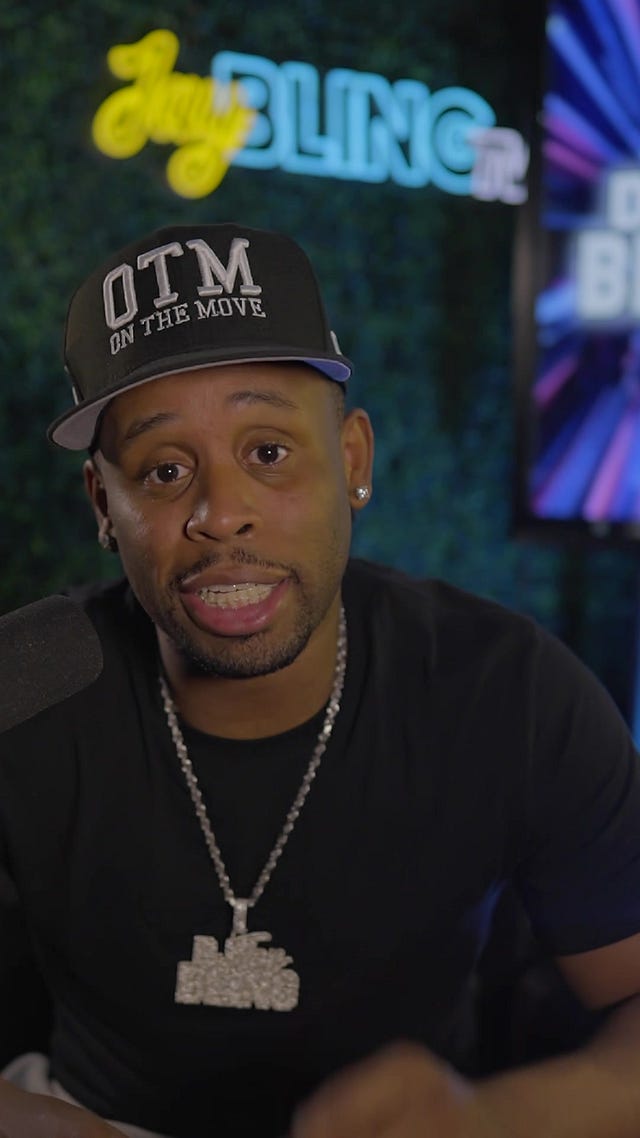
As a music fan, it has been an exciting genre to live through - considering that I only lived through the psych-metal-punk-new wave-grunge rock eras via albums, books and Wikipedia pages. But this year, hip hop’s reign has been put into question. It wasn’t long ago that Lil Baby, DaBaby, Drake, Megan thee Stallion and Kodak Black ruled the airwaves. But in 2023, articles, videos, TikToks (like the example below) are lamenting the death of hip hop, thanks to one crucial stat that will undoubtedly be shared across record label boardrooms and creative agency strategy decks for the rest of 2023:
“For the first time since 1993, no hip hop artist has charted number 1 in single or album sales on the Billboard charts”
 Tiktok failed to load.
Enable 3rd party cookies or use another browser
It’s a cherrypicked stats for sure - as there are still plenty of charting hip hop acts, and streaming numbers would argue that hip hop pummels more eardrums than any other genre in the world right now. And don’t get me started on whether “charting” is even a relevant metric anymore (that’s a whole other newsletter). One could also argue that we saw an influx of “tier 1” hip hop albums released in 2021-22, following the COVID- 19 “great pause”, and 2023 is the year that these artists are now on tour rather than releasing music.
But, the fact remains - this interesting historical statistic is a rare occurrence and had me pondering whether the statistic was a sign of the decline of hip hop or not. To which I concluded this: hip hop can never be dead, as its blood runs through everything (thanks grandpa). Let’s discuss.
Phrasing and Delivery
My first argument pertains to the problem with genres and categorisation generally. Journalists are liberal and lazy when describing artists as “genre bending” and “genre-less”, but will more than happily focus their keyboards toward proclaiming “hip hop is dead” when they were the ones peddling the notion that genres were bending beyond definition. ARE YOU TELLING ME THESE GENRE-DEFYING ARTISTS HAD GENRES AFTER ALL?
I refute the notion that no hip hop song has achieved a number one spot in 2023 because SZA’s Kill Bill held the #1 spot in April this year. “SZA isn’t hip hop!” I hear you decry. Well, she’s not not either. Take this lyric for instance:
You CANNOT tell me that the lyric “I got me a therapist to tell me there's other men
I don't want none, I just want you” isn’t hip hop! The phrase bobs and weaves as swiftly and precisely as Kendrick, but with a melody that is Rihanna-reminiscent. Kill Bill may not be categorised as a hip hop song, but the song was marinated in it for at least 48hrs in the fridge prior to cooking. Sure, hip hop could be in a lull when it comes to not having The Box or Nice For What topping the charts, but as long as artists like Doja Cat, Don Toliver and SZA exist, hip hop can’t die. Are they singing? Are they rapping? Does it matter?
What has missed the mark in this “is hip hop dying” question is the failure to acknowledge how much hip hop has become the language of pop, and music generally. The less fashionable (and probably offensive) example would be songs from Liam Payne, Ed Sheeran and Justin Bieber. You all know the verses: the sing-songy boy-next-door raps designed to be played at a coastal Italian poolside bar at 6pm before the kitchen opens on a tinny megaphone-like speaker. The language of hip hop’s flows far beyond rap itself, for better or for worse. The language of hip hop adds some cumin to an otherwise bland chicken breast and rice.
Moving slightly more fashionable, the delivery within hyperpop verses from the likes of Grimes, glaive and Alice Longyu Gao adopt a high pitched talkative rap delivery that transmutes hip hop into the audio-version of a hormonally charged conversational MSN messenger chat.
Then, more fashionably still, I had a conversation with a friend recently about how (my hero and underground hip hop legend) Dean Blunt’s music almost blends into the alt-indie space of King Krule. Swap out their vocals and you almost have the same artist. Does that mean hip hop is becoming indie, or is indie becoming hip hop? King Krule’s alter-ego is Edgar the Beatmaker, so perhaps there’s your answer right there.
Then, you have the producers. Trap producers Mike Dean and Metro Boomin not only have released solo albums, but perform their instrumentals (granted, often with guests) in a way that alters hip hop from being reliant on rapping and rappers to becoming instrumental hip hop, a new form of expression and stardom. Meanwhile, Kenny Beats is one of the most in-demand festival DJs - a main stage attraction who plays Kanye’s All of the Lights into Rae Sremmurd’s No Type with as much fanfare as a Four Tet riddim drop. In the most euphoric way possible, Beats’ sets are akin to mass hip hop karaoke, without the sequinned microphone.
Everyone Blame Drake
Everyone always blames Drake. I love Drake - don’t @ him please. But seriously: in hip hop history, there is BD and AD - Before Drake and After Drake. As much as he’s criticised for being a poser and a mama’s boy, Drake was that guy who popularised being a rapper AND a singer, with equal weighting. “You’re allowed to do that?” was what many music fans thought. While purists argued “you’re not allowed to do that!”. And with that contention, Drake changed the face of hip hop forever by making it more than rap.
To not spend too much time on him (for obvious reasons), Mr. West’s 808’s and Heartbreaks was the fire starter to this revolution. It was this moment where the biggest rapper in the world became the prince of the plugin and turned autotune into a creative tool that altered the course of hip hop history. While Drake pioneered the hybrid r’n’b/hip hop superstar, Kanye’s flint spawned artists like Travis Scott, Playboi Carti and Lil Uzi Vert, who all employ the use of singing as a texture, rather than a demonstration of vocal ability.
This kindling ushered in an even younger generation, who almost flipped the “After Drake” notion on its head. Artists like Juice WRLD were singers who also rapped in a way that was beautiful, melodic and lyrical. XXXtentacion expressed vulnerability through hip hop disguised as new wave emo.
Preservationists and New References
Thirdly, hip hop can’t die if the torch relay is still being run by young artists who respect, champion and wish to embody the “classic” sounds of hip hop. Dave, Joey Bada$$, Little Simz, Loyle Carner clearly were cut from the same EVISU cloth as their forefathers and are justly championed by generations of hip hop heads for their wordplay and hip hop craftsmanship (while likely being praised less for their sonic innovation).
So on one hand, we have the young custodians, preserving the art form and succeeding deservedly. On the other hand, as a mature genre that’s thirty years old and counting, hip hop may be entering that next phase, where the genre is changed beyond recognition from its original form, much to the chagrin of hip hop heads the world over. You can still trace Jay-Z’s music to the roots of hip hop, while Lil Uzi’s Jersey club meets J-Metal (see the BABYMETAL feature on his latest mixtape) is so far from Grand Master Flash that it may as well be an Irish jig.
That new phase we’re likely entering is one where the newer generations will treat hip hop much like a mood board to reference rather than a lifestyle to live by. Machine Gun Kelly is as punk as Katy Perry is opera - but he has millions of fans around the world for embodying the idea of a rockstar that gen-z can comprehend. Give it ten more years, and we’ll see articles praising the comeback of triplet-flow-trap but with a 2033 spin, and that will make us all feel very old.
Hip pop
My next argument looks at the charts and trends themselves. While there technically hasn’t been a hip hop song at the number one position, I would argue, hip hop has dominated the charts if you look beyond the categorisation.
Bad Bunny, Rosalia: Bad Bunny spent thirteen weeks at #1 on the Billboard charts last year and Rosalia headlined Coachella in April. What’s refreshing about these artists is that they blend reggaeton, flamenco, latin pop and more with hip hop. There is no way that Saoko isn’t hip hop, but it’s also so much more
BLACKPINK, Stray Kids: K-Pop would not be what it is today without hip hop. The earliest K-Pop acts were almost new jack swing/boom bap boy bands - it’s in its DNA! Last year, BLACKPINK spent one week at the top of the charts, with Pink Venom featuring both nods to Future and G-Funk. Meanwhile Stray Kids’ 5-Star album also hit the top spot in 2023, and their lead single S-Class comprises of 80% rap
Kaytramine, Yaeji, Channel Tres: Another fun evolution has been the maturing of dance-hip hop. The combination of dance rhythms and BPMs with rap (in Yaeji’s case, whispered rap) has evolved a 2am Kaytranada or Yaeji DJ set into a sunset main-stage main-event rap/dance along
Fred Again.., Skin on Skin: Speaking of dance music, Fred Again.. and Skin on Skin owe much of their success to hip hop. Sampling is hip hop, and both artists have found success clipping, sampling and transposing spoken word and rap on top of EDM and techno beats
Lil Yachty: Releasing a controversial psych-rap record called Let’s Start Here earlier this year, Lil Yachty created at worst, a Dark Side of the Moon rip off, and at best, the new frontier in rap-psychedelia. Who’dve thought that the original mumble rapper’s final form was…Roger Waters
Dave, Central Cee: Let’s be honest, the accent just sounds cool. As Quavo orders another iced out bracelet, American fans were tuning into the sound of UK hip hop. Combining UK drill, UK hip hop, American hip hop and trap and sometimes other UK mainstays (e.g. UK funky, jungle), hip hop’s next evolution might just be lead by a guy named…Dave
Generation Gap
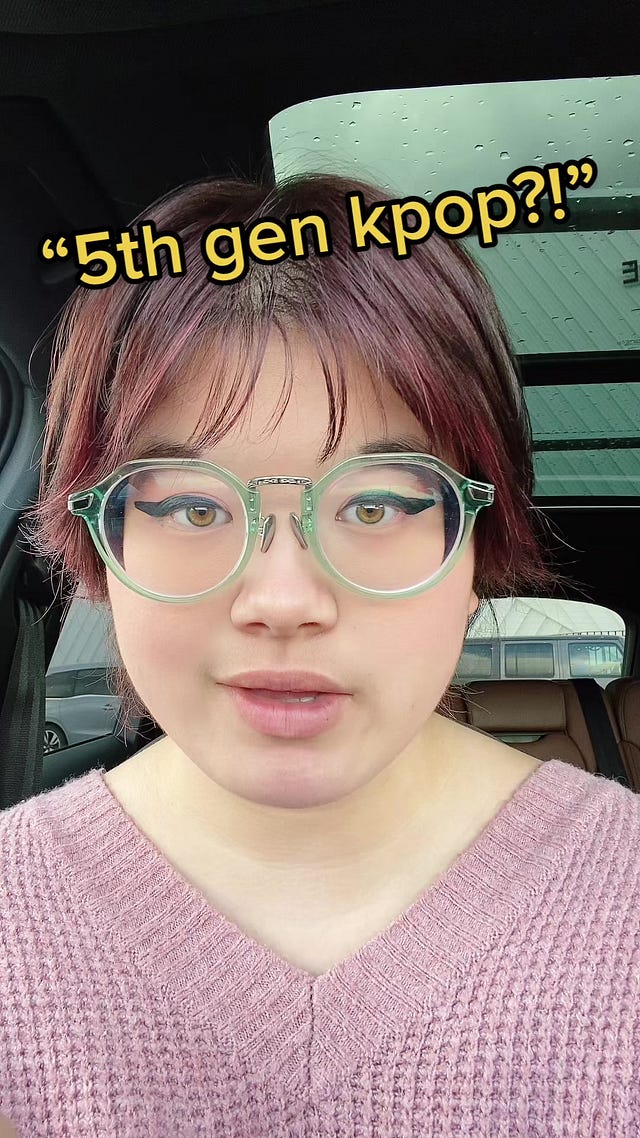
And finally - let’s talk about eras, or generations. I haven’t been able to forget the below video since I saw it, which outlines the generations of K-Pop. For those of you who don’t want to see a TikTokker break down the societal factors that define K-Pop generations, allow me to summarise.
 Tiktok failed to load.
Enable 3rd party cookies or use another browser
K-Pop, unlike any other popular music genre, classifies their artists by generations. Not in the Gen-Y, Z, Alpha sense, but in the eras that they represent and embody. This attribution is likely due to the fact that these groups are born, rather than discovered. So there is a very clear distinction of when these groups were created, and their expired contracts define when they die. So for example, BTS is Gen 3 (2010), ITZY is Gen 4 (2019).
What the above content creator posits is that the generations have less to do with the age of the artists and more to do with a shift in fan culture and technology. This makes sense as the fans are a core mechanic of the K-Pop machine, as much part of the band as the members themselves.
I find this argument an interesting way to look at hip hop, as K-Pop fans are VERY aware of the generations, but hip hop fans aren’t as attuned to this way of thinking. For fun, let’s have a very terrible stab at hip hop generations:
Gen 1: Turntablism, breakbeat and boom bap
Gen 2: Gangsta rap and the battle of the coasts
Gen 3: Bling era, conscious rap
Gen 4: Backpack rap, sample culture and southern rap
Gen 5: Trap, melodic rap, beat-makers, UK drill and lofi
Gen 6: TODAY! Take your guess. My crystal ball says:
Hop hop is female: With burgeoning stars Coi Leray, Ice Spice, Latto and Glorilla, the most exciting rappers right now are all women, and I don’t see that trend slowing down
Hip hop is global: changing faces and changing sounds from Africa, Korea and Latin America, with the underground production emerging out of south east Asia
Hip hop is destroyed: The underground has been stewing on Drain Gang sounds for years, and I can see the sounds of the sewer making its way up to the streets
Here’s the key difference with K-Pop vs hip hop. A K-Pop fan believes that K-pop is forever and the generational shift is part of its evolution. Whereas, a hip hop fan might see the genre more on an axis, Y being “hip hop”, and X being time, with the slope trending ever downward after a thirty year upward trajectory.
But I’d argue, hip hop is forever. And oh how far it’s come.
Thanks for reading! If you liked this month’s newsletter, please consider sharing, commenting or subscribing! It’s free to subscribe, but for the paid tier you can access the full archive of The Permanent Collection - a collection of my favourite songs of all time. See you next month!
Amazing! thanks Derrick. long live HIP-HOP ...... and any other sub variant of it!
100% agree with this. It could also be said that now hip hop has been around long enough to get it's own version of the "rock is dead" tropes that have been going on for decades!